
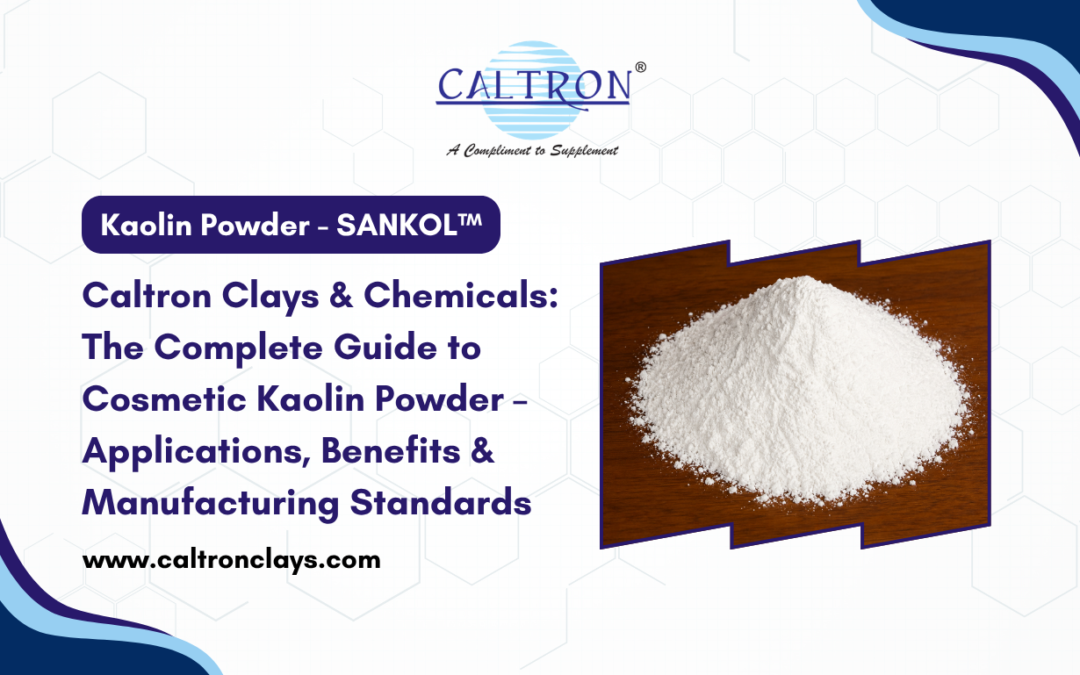
Introduction: What Makes Cosmetic Grade Kaolin a Key Ingredient for Formulators
For cosmetic manufacturers, choosing a mineral ingredient is no longer simply a matter of checking whether the ingredient name appears on a formulation sheet. Raw-material identity, particle characteristics, colour, sensory behaviour, batch consistency, documentation, processing controls, contaminant specifications and supply reliability can all influence whether an ingredient is suitable for commercial production. This is particularly relevant for Cosmetic Grade Kaolin Powder, a mineral ingredient used across masks, powders, foundations, cleansing products and other personal-care formats.
The difference becomes even more important when a formulation moves from an R&D sample to repeated commercial batches. A formulator may initially be interested in texture and oil management, while procurement teams may be concerned with specifications, consistency, documentation and availability. Quality teams, meanwhile, need a material that can be evaluated against defined acceptance criteria. Consequently, selecting a dependable Kaolin Powder Manufacturer in India and Kaolin Powder Supplier in India becomes part of the overall formulation and sourcing strategy rather than simply a purchasing decision.
Caltron Clays & Chemicals addresses this requirement through SANKOL™, its cosmetic-focused kaolin clay powder. Caltron describes SANKOL™ as a high-whiteness mineral material intended for cosmetic and personal-care applications and processes cosmetic mineral raw materials through its dedicated pulverising operation at Vapi. Caltron’s current materials position SANKOL™ for skincare and personal-care formulations where whiteness, texture, mineral characteristics and consistent B2B supply are relevant.
For manufacturers evaluating a Kaolin Powder Manufacturer in India, however, brand positioning should never replace technical evaluation. This guide therefore looks beyond basic ingredient benefits to examine what kaolin is, how its physical characteristics influence formulation, what procurement teams should evaluate, how it differs from talc and bentonite, and where SANKOL™ fits within modern cosmetic raw-material sourcing.
What Is Cosmetic Grade Kaolin Powder?
Cosmetic Grade Kaolin Powder is a processed mineral material based primarily on kaolinite, a hydrated aluminium silicate clay mineral, selected and prepared for use in cosmetic and personal-care formulations. Cosmetic suitability depends on controlled identity, physical characteristics, quality specifications and the requirements of the intended formulation and market.
Kaolin occurs naturally and is associated primarily with the mineral kaolinite. Its layered mineral structure and surface characteristics help explain why kaolin and related clay minerals are useful as adsorbent or absorbent materials and as functional excipients in topical formulations. Scientific literature also documents the use of clay minerals to influence suspension, emulsion and rheological behaviour in dermocosmetic systems.
The term “cosmetic grade” matters because kaolin is not exclusive to cosmetics. Mineral materials sold for unrelated industrial purposes may be produced against completely different specifications. A cosmetic manufacturer therefore should not assume that any material labelled “kaolin” is automatically appropriate for skin-contact or personal-care applications.
For formulation teams, relevant considerations can include mineral identity, particle characteristics, whiteness, physical cleanliness, contaminant controls, microbiological specifications where applicable, processing conditions and supporting documentation.
Why Is Kaolin Powder Widely Used in Cosmetic Formulations?
Kaolin is valued in cosmetics because one mineral ingredient can contribute several useful physical properties, including surface oil management, powder body, texture modification, opacity or appearance effects and sensory characteristics. The exact contribution depends on the kaolin grade, concentration, other ingredients and finished-product format.
Clay minerals have long attracted formulation interest because their surface area, layered structure and physicochemical characteristics can make them useful adsorbents or absorbents. They can also influence rheological behaviour in suspensions and emulsions.
For a cosmetic formulator, these properties translate into practical possibilities.
Kaolin can contribute a dry, mineral sensory profile in powder products. In masks, it can help create the characteristic clay body consumers associate with mineral formulations. In products intended for oily or combination skin positioning, its interaction with surface oils makes it relevant to mattifying concepts. In colour cosmetics, whiteness and texture may influence the appearance and feel of the base system.
The advantage is therefore not based on one universal “benefit.” Kaolin is useful because its physical properties can perform different functions depending on how the formulation is designed.
That distinction is important for R&D teams. Kaolin should be selected because its particular grade and characteristics fit the formulation objective—not simply because kaolin is a familiar natural mineral.
How Does Cosmetic Grade Kaolin Work in Skincare Formulations?
Kaolin works primarily through physical interactions rather than by acting as a therapeutic active ingredient. Its mineral surface can interact with oils and other materials, while its fine particulate nature can contribute body, texture, opacity and sensory effects to a formulation.
The words absorption and adsorption are often used interchangeably in cosmetic marketing, but technically they describe different processes. Absorption involves material entering another material, whereas adsorption refers to molecules or substances being retained at a surface. Clay systems may exhibit behaviour described using both terms depending on the material and system being studied. Scientific literature recognizes clay minerals for their adsorbent and absorbent properties.
For skincare formulators, the commercially relevant point is that kaolin can interact with excess surface oil and contribute to a less oily or more matte finish. That makes kaolin clay for cosmetics relevant to clay masks, cleansing systems and mattifying powders.
Its function must still be evaluated in the complete formula. Increasing the amount of a mineral powder does not automatically create a better product. The formulator must balance oil management with spreadability, skin feel, drying profile, suspension, viscosity and the intended sensory experience.
This is why raw-material evaluation should include bench testing rather than relying solely on a supplier’s ingredient description.
Why Are Purity and Mineral Composition Important?
Purity and mineral composition matter because natural mineral ingredients can vary according to geological source and processing. Cosmetic manufacturers therefore need controlled specifications that establish material identity and define acceptable quality parameters for repeatable production.
Kaolinite is fundamentally associated with aluminium silicate chemistry, but a commercially supplied kaolin is a natural mineral raw material rather than an abstract chemical formula in isolation. Geological origin, accompanying minerals and subsequent processing can influence the commercial material.
This makes raw-material qualification especially important.
A manufacturer should establish what characteristics matter for its product and market, then evaluate the supplier’s specification and appropriate batch documentation against those requirements. Depending on the intended application and regulatory jurisdiction, this can include identity, physical properties and relevant contaminant or microbiological requirements.
SANKOL™ is positioned around a suitable alumina-silica composition and high whiteness for cosmetic applications. Caltron’s published material also emphasizes controlled processing and cosmetic-focused mineral sourcing.
However, formulators should evaluate actual product specifications and relevant batch documentation rather than treating general marketing statements as substitutes for technical qualification.
Why Does Whiteness Matter in Cosmetic Grade Kaolin?
Whiteness is principally an aesthetic and formulation characteristic. A high-whiteness kaolin can help formulators create a clean, consistent base appearance in masks, face powders, foundations and other products where the raw mineral contributes visibly to the finished formulation.
This is particularly relevant in colour-sensitive products.
Consider a white clay mask. If the mineral base has noticeable colour variation from batch to batch, the final mask may also show visible variation. In a foundation or powder, the mineral’s base tone may interact with pigments and other powders. In soaps or cleansing products, the mineral may influence the overall visual character of the product.
High-whiteness kaolin can therefore be valuable for aesthetic control.
It is important, however, not to use whiteness as a synonym for purity. A visually white powder is not automatically chemically or microbiologically superior. Whiteness is one useful quality attribute, while purity and suitability must be established through appropriate specifications and testing.
SANKOL™ is specifically positioned by Caltron Clays & Chemicals as a high-whiteness kaolin, making visual consistency one of the characteristics relevant to cosmetic formulators evaluating the grade.
How Particle Characteristics Influence Cosmetic Formulation Performance
Particle characteristics can affect how kaolin feels, disperses, spreads and behaves during processing. Formulators should therefore evaluate fineness and particle distribution alongside mineral identity rather than assuming all kaolin powders will produce the same sensory or manufacturing result.
Particle characteristics can influence several aspects of a cosmetic product.
A fine mineral powder can contribute a smooth tactile profile, while inappropriate particle characteristics may produce an undesirable sensory result. Distribution can also influence dispersion, powder flow, visual uniformity and interactions with the rest of the formulation.
For dry powders, formulators may evaluate flow, pickup, spread and payoff.
For masks and wet systems, dispersion behaviour becomes important. Poor incorporation can result in agglomerates or an uneven product. Processing sequence and mixing conditions may need adjustment according to the overall formula.
In foundations and other pigmented products, mineral particles also interact with pigments, fillers, binders and oils, making bench evaluation essential.
SANKOL™ is described by Caltron as an ultra-fine cosmetic-focused kaolin. Exact particle-size requirements, however, should always be evaluated against current product specifications rather than assumed from descriptive terminology.
Major Applications of Kaolin Powder in Cosmetics and Personal Care
The versatility of Cosmetic Grade Kaolin Powder is one reason it remains relevant across multiple personal-care categories. Its function, however, differs by application.
Kaolin for Face Masks
Clay masks are perhaps the most recognizable application.
Kaolin contributes the mineral body and characteristic appearance expected from a clay-based mask while helping manage surface oils. Depending on the formulation, it can be combined with water, humectants, emollients, rheology modifiers, botanical ingredients or other cosmetic components.
For manufacturers, the challenge is balancing clay loading with application, drying characteristics, removal and after-feel. More clay is not automatically better. The final sensory profile depends on the complete system.
Kaolin for Face Powders
In face powders, kaolin can contribute absorbency, body, opacity and a matte visual effect.
Its physical properties can make it useful in formulations intended to reduce the appearance of surface shine. Powder developers should assess compatibility with pigments, fillers, binders and other components as well as pickup and spread during application.
Whiteness also becomes particularly relevant because the base mineral can influence colour development.
Kaolin for Foundations
Kaolin can be incorporated into selected powder and liquid foundation concepts where formulators want mineral character, oil management, opacity or texture modification.
Its presence does not independently determine coverage or wear. Those properties emerge from the complete pigment, binder, oil, film-former and powder system.
Manufacturers should therefore evaluate kaolin at realistic prototype concentrations rather than assessing the ingredient in isolation.
Kaolin for Baby Powders
Kaolin can be considered in mineral-based powder systems, including formulations developed without talc.
For products intended for babies or other sensitive-use categories, however, ingredient selection requires particularly careful safety assessment, contaminant control, exposure consideration and compliance with applicable market requirements. A mineral’s natural origin should never be treated as automatic evidence of safety for every population or application.
Kaolin for Sunscreen Formulations
Kaolin may be considered as a supporting mineral ingredient in certain sunscreen or sun-care formulation systems for texture, sensory or appearance-related reasons.
It should not be assumed that adding kaolin independently provides an SPF value or guarantees sunscreen efficacy. Sunscreen performance depends on the approved or permitted UV-filter system, complete formulation and applicable testing and regulatory requirements.
This distinction is essential whenever kaolin for sunscreens is discussed in technical B2B content.
Kaolin for Soaps and Cleansing Products
Kaolin can contribute mineral character, visual identity, texture and surface oil interaction to soaps and selected cleansing products.
It can be especially relevant where manufacturers want to develop clay-based or mineral-positioned cleansing concepts. The formulator still needs to assess compatibility with surfactants, soap bases, fragrance systems and other components.
Kaolin for Toothpaste and Personal-Care Formulations
Kaolin may also be evaluated for selected oral and personal-care formulations where its physical mineral characteristics serve the formulation objective.
Oral-care products introduce their own performance, safety and regulatory requirements. Manufacturers should therefore evaluate the suitability of the particular grade, intended function, specifications and applicable regulations rather than extrapolating from skincare use.
Kaolin Powder for Oil-Control and Mattifying Formulations
Kaolin is relevant to mattifying formulations because its mineral surface can interact with oils, helping reduce the oily appearance of the product or skin surface. This makes it useful in masks, face powders and other products designed around oil-management and matte-finish positioning.
For formulators, however, “maximum absorption” should not necessarily be the objective.
A successful mattifying product must still feel pleasant. Excessive powder loading can potentially affect drag, spreadability, dryness, appearance or product removal. The ideal balance depends on the target consumer experience and formulation format.
This is where oil absorbing cosmetic ingredients need to be evaluated as part of a system. Kaolin may work alongside silica, starches, other mineral powders, emollients, binders or rheology modifiers depending on the formulation concept.
SANKOL™ is positioned by Caltron for applications where oil and sebum management and a matte sensory or visual effect are desired. Its fine texture and high-whiteness profile provide additional considerations for formulators developing such products.
What Should Manufacturers Check Before Buying Cosmetic Grade Kaolin Powder?
Manufacturers should evaluate much more than price when sourcing kaolin. A commercially suitable grade should be assessed for identity, specifications, consistency, particle characteristics, appearance, appropriate quality documentation, supplier controls and suitability for the intended market and formulation.
A practical procurement and R&D qualification checklist includes:
- Material identity: Confirm the ingredient being supplied and its intended cosmetic application.
- Specification: Review the current technical specification rather than relying solely on marketing literature.
- Particle characteristics: Evaluate fineness and distribution against sensory and processing requirements.
- Whiteness and appearance: Define acceptable colour characteristics where finished-product aesthetics are important.
- Relevant contaminant specifications: Establish requirements based on the material, application and target jurisdiction.
- Microbiological requirements: Determine appropriate limits and testing based on the intended product and manufacturing system.
- Batch consistency: Compare qualification samples or batches where commercially appropriate.
- Certificate of Analysis: Determine what batch-specific documentation is supplied.
- Traceability: Understand how raw materials and production batches are identified.
- Packaging: Ensure packaging supports appropriate handling and protection during storage and transport.
- Storage requirements: Follow supplier recommendations and internal raw-material controls.
- Manufacturing capability: Evaluate whether the supplier can support ongoing commercial requirements.
- Scalability: Consider whether supply can move from development quantities to commercial purchasing.
- Market documentation: Confirm documentation required for the jurisdictions where the finished product will be marketed.
This qualification process is especially important for international buyers, where documentation and market-specific requirements can vary.
Why Batch-to-Batch Consistency Matters When Choosing a Kaolin Powder Supplier
Raw-material consistency matters because a mineral ingredient that changes materially from batch to batch can create downstream variation in processing, colour, texture, sensory performance and finished-product quality control.
At laboratory scale, small adjustments may seem manageable. Commercial manufacturing is less forgiving.
A change in powder behaviour can affect charging and mixing. A visible change in mineral colour may require investigation when producing a tightly controlled white mask. Differences in particle characteristics may influence dispersion or tactile feel. Any unexpected variation can create additional work for production and quality teams.
A dependable Kaolin Powder Supplier in India should therefore be evaluated not simply on whether a sample performs well once, but on whether the supplier can support repeatable commercial sourcing.
This is also why communication between procurement, R&D and quality teams matters. Procurement may negotiate commercial terms, but formulation and QC teams should define the technical acceptance criteria that protect manufacturing consistency.
What Is SANKOL™ Cosmetic Grade Kaolin Powder?
SANKOL™ is Caltron Clays & Chemicals cosmetic-focused kaolin clay powder, positioned for skincare, beauty and personal-care formulations. It is based on naturally sourced Indian mineral material and is processed with emphasis on high whiteness, fine texture, suitable alumina-silica composition and formulation versatility.
Caltron has developed SANKOL™ specifically for manufacturers rather than positioning it as a consumer-ready cosmetic product.
The material is described as an ultra-fine hydrated aluminium silicate sourced from high-purity natural Indian mineral deposits. Caltron’s cosmetic materials emphasize high whiteness and physical characteristics relevant to skincare and personal-care applications.
Potential formulation areas include face powders, foundations, masks, soaps and other cosmetic and personal-care systems. Caltron also identifies its dedicated Vapi pulverising operation as part of its cosmetic mineral processing approach.
For an R&D team, these attributes make SANKOL™ a candidate for technical evaluation. Final suitability should still be confirmed against the current specification, formulation trials, finished-product testing and applicable regulatory requirements.
How Caltron’s Dedicated Mineral Processing Approach Elevates Cosmetic-Grade Kaolin Quality
For mineral-based cosmetic raw materials, processing is an important stage between geological source and formulation use.
Caltron Clays & Chemicals states that it operates a dedicated pulverising unit at Vapi for cosmetic raw materials of mineral origin. This is relevant because cosmetic manufacturers often require suppliers to understand characteristics such as fineness, consistency, appearance and controlled handling rather than treating the material as a generic industrial mineral.
Dedicated processing also reflects Caltron’s focus on the requirements of cosmetic manufacturers.
For B2B buyers, however, the right qualification questions remain technical: What is the current specification? Which batch documents are available? How is consistency managed? What packaging options are offered? What documentation can be supplied for the intended market?
A processing facility is valuable when it supports those commercial and technical requirements consistently.
What Makes SANKOL™ a Smart Choice for Modern Cosmetic Formulations?
Modern formulators increasingly need ingredients that work across technical, sensory and commercial requirements simultaneously.
SANKOL™ is positioned around that intersection.
Its natural mineral origin provides a straightforward ingredient story for mineral-based product concepts. Its fine physical character is relevant to sensory and spreadability requirements. High whiteness supports formulations where visual appearance matters. Kaolin’s established adsorbent and absorbent characteristics make it relevant to surface-oil management and mattifying concepts.
The versatility of Cosmetic Grade Kaolin Powder also allows R&D teams to evaluate it across multiple categories rather than limiting it to conventional clay masks.
For Caltron, the B2B value proposition is therefore not simply “we sell kaolin.” SANKOL™ combines a cosmetic-focused mineral grade with Caltron’s experience in supplying mineral-origin raw materials and a dedicated processing approach for the cosmetic segment.
Manufacturers should still qualify SANKOL™ against their own formula, process, quality system and market requirements. That technical qualification is what turns a promising ingredient into a commercially useful raw material.
How to Evaluate a Kaolin Powder Manufacturer in India
A reliable kaolin manufacturer should be evaluated on technical consistency, documentation, manufacturing capability and commercial reliability—not price alone. The best supplier is one whose material and quality systems align with the manufacturer’s formulation, regulatory and production requirements.
Before approving a Kaolin Powder Manufacturer in India, procurement and technical teams should ask several practical questions.
What is the current product specification? What batch-specific documentation is available? Are relevant quality parameters clearly defined? Can samples be evaluated before commercial qualification? How does the supplier manage traceability? Can it support the quantities required after scale-up? What packaging formats are available? Can it provide appropriate documents for domestic or export transactions where required?
R&D should then conduct application testing.
A clay mask team may prioritize dispersion, spread, drying characteristics and after-feel. A colour-cosmetics developer may pay greater attention to whiteness, powder feel and interaction with pigments. A powder-product manufacturer may evaluate flow and sensory behaviour.
This combination of supplier assessment and formulation testing is far more meaningful than choosing a source solely because it advertises a high-purity material.
Caltron Clays & Chemicals positions SANKOL™ within precisely this B2B environment, supporting manufacturers, formulators and cosmetic brands seeking mineral-based cosmetic raw materials.
Kaolin Powder Trends Cosmetic Manufacturers Should Watch in 2026
In 2026, the most relevant developments around kaolin are less about discovering a new mineral function and more about how brands source, document, formulate and communicate established mineral ingredients.
One notable area is talc-free product development. Regulatory and scientific discussion around talc remains active. In the United States, FDA’s recent activity demonstrates that talc testing and potential contamination continue to receive regulatory attention, although this should not be misrepresented as a blanket finding that talc-containing cosmetics are unsafe.
Ingredient transparency is another important consideration. Buyers increasingly want to understand what a raw material is, where it comes from, how it is processed and what documentation supports it. For B2B suppliers, this increases the importance of traceability and clear technical communication.
Natural-origin and mineral-based formulation concepts also continue to make kaolin commercially relevant. But “natural” should not replace technical evaluation. Formulators still need to assess stability, sensory characteristics, compatibility, quality and safety within the complete finished product.
Sensory optimization is equally important. A modern clay formulation cannot rely solely on absorbency. Consumers expect products that spread well, look consistent and deliver an acceptable after-feel. This places greater emphasis on particle characteristics and on balancing mineral powders with the rest of the formulation.
Finally, multifunctionality continues to matter. Cosmetic R&D teams often prefer ingredients that contribute several useful physical characteristics. Kaolin’s combination of mineral character, oil interaction, texture and appearance explains why this established ingredient remains relevant to contemporary formulation development.
Why Cosmetic Manufacturers Trust Caltron Clays & Chemicals for High-Quality Raw Materials
Choosing a Cosmetic Raw Material Manufacturer and Supplier in India requires more than identifying a company that has the desired ingredient in its catalogue. Cosmetic manufacturers need suppliers that understand the difference between supplying a mineral commodity and supplying a raw material intended for formulation development and commercial personal-care manufacturing.
Caltron Clays & Chemicals has developed its cosmetic mineral portfolio around this B2B requirement. Its cosmetic range includes SANKOL™ Kaolin Powder, and the company states that it supplies cosmetic raw materials to customers in India and international markets.
For SANKOL™, Caltron’s positioning focuses on high whiteness, cosmetic-oriented processing, suitable mineral composition, fine physical characteristics and versatility across skincare and personal-care applications. Its dedicated pulverising infrastructure at Vapi further reflects the company’s focus on mineral-origin cosmetic materials.
For manufacturers comparing a Kaolin Powder Supplier in India, Caltron offers the additional advantage of working within the cosmetic raw-material segment rather than approaching kaolin only as a general-purpose industrial mineral.
The appropriate next step for any manufacturer remains technical qualification: review current specifications and available documentation, evaluate the material in the intended formulation and confirm that the resulting finished product meets the manufacturer’s quality and regulatory requirements.
Frequently Asked Questions
1. What is cosmetic grade kaolin powder?
Cosmetic grade kaolin powder is a fine mineral ingredient primarily composed of kaolinite, a hydrated aluminium silicate. Caltron Clays & Chemicals offers SANKOL™, a cosmetic-focused kaolin powder for skincare and personal-care formulations.
2. What is kaolin powder used for in cosmetics?
Kaolin powder is commonly used in face masks, face powders, foundations, soaps, cleansers and other personal-care formulations for texture, oil management and mattifying properties. SANKOL™ by Caltron Clays & Chemicals is developed for cosmetic formulation applications.
3. What are the benefits of kaolin powder for cosmetic formulations?
Kaolin can contribute oil and sebum management, a matte finish, smooth texture and useful mineral characteristics to suitable formulations. Caltron Clays & Chemicals’ SANKOL™ also offers high whiteness and fine texture for cosmetic applications.
4. Is kaolin powder good for face mask formulations?
Yes. Kaolin is widely used in clay face masks because it provides mineral body and helps manage surface oil while supporting the desired clay-mask texture. SANKOL™ from Caltron Clays & Chemicals can be evaluated by formulators developing face-mask products.
5. What is the difference between kaolin clay and bentonite clay?
Kaolin is primarily associated with kaolinite, while bentonite generally contains smectite-group minerals and often exhibits greater swelling in water. Caltron Clays & Chemicals offers SANKOL™ Kaolin Powder for manufacturers requiring cosmetic-focused kaolin.
6. Can kaolin powder be used in talc-free cosmetics?
Yes, kaolin can be evaluated as part of talc-free powder and cosmetic formulation strategies, although it is not necessarily a one-to-one replacement for talc. SANKOL™ by Caltron Clays & Chemicals provides manufacturers with a mineral-based kaolin option.
7. How do I choose cosmetic grade kaolin powder?
Check mineral identity, particle characteristics, whiteness, batch consistency, specifications, relevant quality parameters and supplier documentation. Caltron Clays & Chemicals’ SANKOL™ is specifically positioned for cosmetic and personal-care formulation requirements.
8. Who is a Kaolin Powder Manufacturer in India for cosmetics?
Caltron Clays & Chemicals is a Kaolin Powder Manufacturer in India offering SANKOL™, its cosmetic-focused kaolin clay powder. It is designed for manufacturers and formulators working across skincare, beauty and personal-care applications.
9. Where can I buy cosmetic grade kaolin powder in India?
B2B buyers should source from a Kaolin Powder Supplier in India that can support appropriate specifications, consistency and technical documentation. Caltron Clays & Chemicals supplies SANKOL™ for cosmetic manufacturing and formulation requirements.
10. Why choose SANKOL™ Kaolin Powder from Caltron Clays & Chemicals?
SANKOL™ by Caltron Clays & Chemicals combines high whiteness, fine texture, mineral-based functionality and versatility for cosmetic formulations. It can be evaluated for face powders, foundations, clay masks, soaps and other personal-care products.
Conclusion: From Mineral Quality to Formulation Performance – Why the Right Kaolin Matters
Selecting the right Cosmetic Grade Kaolin Powder requires more than confirming that a material is kaolin. Cosmetic manufacturers and formulators need to consider purity, mineral consistency, particle characteristics, whiteness, texture, absorbency, formulation compatibility, manufacturing controls, and supporting quality documentation. These factors become particularly important when a formulation moves from laboratory development to repeat commercial production, where consistency between batches can directly influence processing and finished-product quality.
Supplier capability is equally important. Working with an experienced Kaolin Powder Manufacturer in India can help manufacturers establish a more dependable raw-material sourcing process built around consistent quality, technical understanding, controlled processing, and commercial-scale availability. Procurement teams should therefore evaluate both the characteristics of the kaolin itself and the manufacturer’s ability to meet ongoing cosmetic-industry requirements.
Caltron Clays & Chemicals offers SANKOL™, an ultra-fine, high-whiteness cosmetic-grade Kaolin Clay Powder sourced from high-purity natural Indian mineral deposits and processed for cosmetic and personal-care applications. Supported by Caltron’s dedicated mineral pulverising facility at Vapi and its experience as a Cosmetic Raw Material Manufacturer in India, SANKOL™ provides formulators with a versatile mineral option for face powders, foundations, clay masks, soaps, sunscreens, and other suitable personal-care formulations. Businesses evaluating a dependable Kaolin Powder Supplier in India can connect with Caltron Clays & Chemicals to discuss SANKOL™ for formulation development and commercial manufacturing requirements.
Caltron Clays & Chemicals Pvt Ltd
Address: Office No. 211, 2nd Floor, Orbit Premises, Next to Sheetal Banquets, Opp to Inox Plaza, Mindspace, Malad West, Mumbai, Maharashtra 400064 India
Phone No.: 022 3571 9844 | +91 70214 37453 | +91 22 2876 4864
Website: https://caltronclays.com
Email: marketing@caltronclays.com | sales@caltronclays.com
Google Maps: https://maps.app.goo.gl/jCuz1ZCf1iAhzZiH7
Recent Comments