
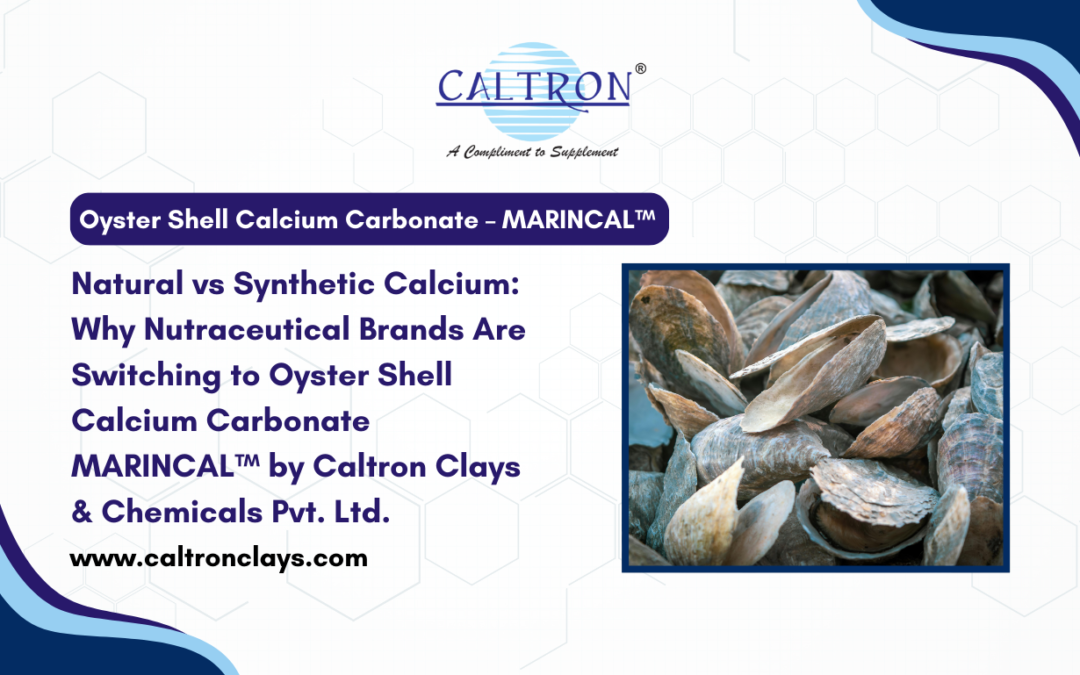
Introduction:
Calcium deficiency remains one of the most persistent global micronutrient challenges despite decades of supplementation efforts. Across Asia, Europe, North America, and emerging economies, inadequate calcium intake continues to affect bone density, maternal health, pediatric growth, and geriatric wellness. While awareness of calcium supplementation is widespread, the conversation has shifted dramatically in recent years—from how much calcium to what type of calcium.
For decades, rock-derived synthetic calcium carbonate dominated the supplement industry due to its cost efficiency and wide availability. However, increasing scrutiny around raw material sourcing, heavy metal contamination, bioavailability limitations, and clean-label demand has prompted a transformation within the nutraceutical sector. Today, manufacturers are reassessing their calcium sources and transitioning toward marine-derived alternatives.
Among these, Oyster Shell Calcium Carbonate Powder MARINCAL™ has emerged as a trusted pharmaceutical-grade marine calcium solution. Manufactured by Caltron Clays & Chemicals Pvt. Ltd., MARINCAL™ represents a new generation of high-purity, heavy metal controlled calcium designed specifically for pharmaceutical raw materials, nutraceutical manufacturing, and food & supplement industries.
As a recognized Oyster Shell Calcium Carbonate Powder Manufacturer in India, Caltron Clays & Chemicals Pvt. Ltd. supports domestic and global brands seeking natural calcium for nutraceuticals with consistent bulk supply and export-grade compliance.
This comprehensive B2B-focused article explores the scientific, regulatory, and commercial drivers behind the shift from synthetic to marine calcium and why nutraceutical brands are increasingly partnering with a leading Marine Calcium Supplier like Caltron.
The Global Calcium Challenge and Market Evolution
Calcium plays a foundational role in:
- Bone mineralization
- Neuromuscular function
- Cardiovascular support
- Hormonal regulation
Despite this, dietary intake levels remain insufficient in many populations due to:
- Reduced dairy consumption
- Urban dietary shifts
- Vegan/plant-based trends
- Processed food dependency
The global nutraceutical market has responded with an expanding range of calcium supplements—tablets, capsules, chewables, effervescent forms, functional beverages, and fortified foods.
However, modern consumers no longer evaluate supplements solely based on elemental calcium percentage. Instead, they consider:
- Source origin
- Clean label appeal
- Mineral synergy
- Sustainability
- Long-term safety perception
This evolving demand has accelerated comparisons between calcium carbonate vs oyster shell calcium, particularly in premium nutraceutical segments.
Understanding Synthetic Calcium
Synthetic calcium carbonate is primarily derived from mined limestone or chemically precipitated processes. While chemically represented as CaCO₃, the origin and structure differ significantly from marine-derived calcium.
Rock-Based Calcium Carbonate
Traditional synthetic calcium originates from geological deposits formed over millions of years. Limestone is mined, crushed, and processed into fine powder suitable for industrial and pharmaceutical use.
In some cases, chemically precipitated calcium carbonate (PCC) is produced through controlled reactions involving carbon dioxide and calcium hydroxide.
Industrial Processing
Rock-based calcium requires:
- High-temperature calcination
- Chemical purification
- Grinding and micronization
- Controlled particle size standardization
Though effective in producing pharmaceutical grade calcium carbonate, the process involves extensive industrial intervention.
Rock-Based Calcium Carbonate Risks
While regulatory standards control impurities, geological materials can carry:
- Trace heavy metals
- Environmental contaminants
- Inconsistent mineral composition
This has led to increased discussions around rock-based calcium carbonate risks, particularly in long-term supplementation.
Bioavailability Considerations
Synthetic calcium carbonate offers high elemental calcium (around 40%). However, absorption may depend on:
- Gastric acidity
- Particle size
- Co-administered nutrients
For elderly populations with reduced stomach acid, absorption efficiency can become a concern.
Cost vs Long-Term Brand Strategy
Synthetic calcium is cost-effective and widely available. However, as nutraceutical brands transition toward premium positioning, reliance on rock-based calcium may limit differentiation.
What is Natural Marine Calcium?
Natural marine calcium is derived from oyster shells harvested from marine ecosystems. Unlike geological limestone, oyster shells are biologically structured mineral matrices formed through natural processes.
Oyster Shell Source
Oyster shells are composed primarily of calcium carbonate, structured in crystalline layers formed through marine biomineralization.
This biological origin contributes to:
- Structured mineral alignment
- Trace mineral presence
- Enhanced consumer perception
Marine Mineral Composition
Marine calcium contains:
- Calcium carbonate
- Trace magnesium
- Silica
- Other marine-derived minerals
This natural mineral synergy strengthens its appeal as Natural Calcium for Nutraceuticals.
Bioavailability of Marine Calcium
The bioavailability of marine calcium is often discussed in formulation science due to:
- Biological origin
- Structured crystalline matrix
- Trace mineral synergy
While avoiding exaggerated health claims, marine calcium is widely perceived as more bio-compatible compared to synthetic alternatives.
Clean Label Advantage
Marine-derived minerals align with:
- Natural ingredient positioning
- Minimal chemical processing narratives
- Sustainable sourcing appeal
These factors significantly influence consumer trust.
Detailed Comparison: Natural vs Synthetic Calcium
From a formulation and B2B procurement perspective, the distinction between synthetic and marine calcium extends beyond chemical formula.
Source
Synthetic calcium originates from mined rock or chemical precipitation. Marine calcium derives from oyster shells formed biologically.
Processing
Synthetic calcium undergoes heavy industrial processing. Marine calcium undergoes controlled purification and micronization.
Bioavailability
Synthetic calcium absorption depends on gastric acidity. Marine calcium offers improved perception due to natural mineral structure.
Mineral Synergy
Synthetic calcium is largely CaCO₃ alone. Marine calcium includes trace magnesium and marine-derived minerals.
Impurity Risk
Rock-derived materials may contain geological contaminants. Marine calcium processed under strict controls offers heavy metal controlled calcium powder profiles.
Long-Term Safety Perception
Consumers increasingly prefer natural sources for extended supplementation.
Market Positioning
Synthetic calcium aligns with commodity supplements. Marine calcium supports premium branding.
Cost Efficiency
Synthetic calcium offers short-term cost advantage. Marine calcium enhances long-term brand value and price realization.
Why Nutraceutical Brands Are Switching
1. Consumer Demand for Natural Ingredients
Modern consumers evaluate supplement labels closely. Words like “marine calcium” resonate more positively than “calcium carbonate.”
2. Clean Label Movement
The global clean-label trend prioritizes recognizable, natural sources. Marine calcium supports this positioning effectively.
3. Regulatory Compliance
Export markets demand:
- Heavy metal testing
- GMP compliance
- Traceability documentation
As a trusted Oyster Shell Calcium Carbonate Powder Supplier in India, Caltron ensures export-ready documentation.
4. Premium Differentiation
Brands can:
- Command higher pricing
- Improve marketing narratives
- Target health-conscious consumers
5. Absorption & Bio-Compatibility Messaging
Without making medical claims, brands can highlight discussions around the bioavailability of marine calcium.
Oysto Teratta vs Meta-Calciota
Two prominent oyster shell species are utilized in marine calcium production.
Oysto Teratta
- Higher CaCO₃ assay
- Fibrous, flaky texture
- Approximately 1.5% magnesium
- Limited availability
- Premium-grade raw material
Ideal for high-end nutraceutical tablets and capsules.
Meta-Calciota
- More abundant species
- Slightly lower assay
- Economical option
- Suitable for cost-sensitive formulations
Caltron Clays & Chemicals Pvt. Ltd. ensures uninterrupted sourcing through global procurement networks, strengthening its position as a leading Oyster Shell Calcium Powder Bulk Supplier.
Applications of MARINCAL™
MARINCAL™ is engineered for diverse nutraceutical and pharmaceutical applications:
Tablets
Excellent compressibility and particle size control.
Capsules
Compatible with gelatin and vegetarian capsules.
Softgel
Blended with vitamin D3 and K2 systems.
Suspensions
Used in pediatric and geriatric liquid formulations.
Chewables
Ideal for flavored calcium supplements.
Functional Foods
Fortified beverages, protein powders, nutrition bars.
Cosmetic Formulations
Mineral-based skincare and cosmetic applications.
As a prominent Oyster Shell Calcium Carbonate Powder Manufacturer in India, Caltron supports high-volume production across dosage formats.
Quality & Purification Process
Raw Shell Selection
Only high-quality oyster shells are procured.
Multi-Stage Cleaning
Removal of organic matter and impurities.
Controlled Thermal Treatment
Ensures microbial safety while preserving mineral integrity.
Micronization
Achieves consistent particle size.
Heavy Metal Testing
Ensures compliance with pharmaceutical grade calcium carbonate standards.
Bulk Manufacturing Capacity
Scalable production for domestic and international markets.
Caltron Clays & Chemicals Pvt. Ltd. has built a reputation as a pharmaceutical-grade marine calcium specialist with global export capabilities.
Why Choose Caltron Clays & Chemicals Pvt. Ltd.
Caltron Clays & Chemicals Pvt. Ltd. stands among the leading Oyster Shell Calcium Carbonate Powder Manufacturer in India, offering:
- Consistent bulk supply
- Export documentation
- Controlled impurity levels
- Competitive pricing
- Global sourcing network
- Decades of marine calcium expertise
As a recognized Marine Calcium Supplier, Caltron supports nutraceutical manufacturers with scalable, compliant raw materials tailored to modern formulation needs.
The Future of Marine Calcium Market (2026 & Beyond)
Market trends indicate:
- Rising clean-label supplement demand
- Aging global demographics
- Premium nutraceutical growth
- Increased regulatory scrutiny on impurities
Marine-derived calcium is expected to witness sustained growth as brands prioritize natural sourcing.
The shift toward marine calcium is not a temporary trend but a structural evolution in nutraceutical manufacturing.
Frequently Asked Questions
Is oyster shell calcium better than synthetic calcium?
Oyster shell calcium is derived from natural marine sources and contains trace minerals. Many nutraceutical brands prefer it for clean-label positioning and premium product differentiation compared to synthetic calcium.
Is marine calcium safe for long-term use?
Pharmaceutical-grade marine calcium processed under strict quality controls is considered suitable for long-term supplementation when formulated appropriately.
What is the difference between Oysto Teratta and Meta-Calciota?
Oysto Teratta offers higher assay and trace magnesium, making it suitable for premium formulations, while Meta-Calciota provides a cost-effective natural alternative.
Why are supplement brands switching to natural calcium?
Consumer demand for natural ingredients, regulatory compliance, and premium positioning drive the transition from synthetic to marine calcium.
What industries use oyster shell calcium carbonate?
It is widely used in nutraceutical manufacturing, pharmaceutical raw materials, functional foods, and cosmetic formulations.
Is MARINCAL™ suitable for tablets and capsules?
Yes, MARINCAL™ is engineered for tablet compression, encapsulation, suspension, and chewable applications.
Conclusion
The global nutraceutical industry is entering a new phase where raw material transparency, clean-label alignment, and premium differentiation are critical success factors. The debate between synthetic and natural calcium has moved beyond elemental composition toward sourcing integrity, impurity control, and long-term brand positioning.
By offering MARINCAL™, Caltron Clays & Chemicals Pvt. Ltd. continues to strengthen its position as a leading Oyster Shell Calcium Carbonate Powder Manufacturer in India, supporting pharmaceutical and nutraceutical manufacturers worldwide. For brands seeking a reliable Oyster Shell Calcium Carbonate Powder Supplier in India, a scalable Marine Calcium Supplier, and a pharmaceutical-grade marine calcium specialist, MARINCAL™ represents a strategic choice for future-ready formulations.
If your nutraceutical brand is evaluating natural marine calcium sourcing, MARINCAL™ offers the purity, scalability, and compliance required for global pharmaceutical and supplement markets.
Connect with Caltron Clays & Chemicals Pvt. Ltd.
Enquire for Bulk Orders & Export Supply
Website:https://caltronclays.com
Office: Office No. 211, 2nd Floor, Orbit Premises, Next to Sheetal Banquets, Opp. Inox Plaza, Mindspace, Off New Link Road, Chincholi Bunder, Malad West, Mumbai, Maharashtra 400064, India
Email: marketing@caltronclays.com | sales@caltronclays.com
Call: +91 70214 37453 / +91 22 2876 4864 / +91 22 3571 9844
Google Maps:https://maps.app.goo.gl/jCuz1ZCf1iAhzZiH7
Recent Comments