
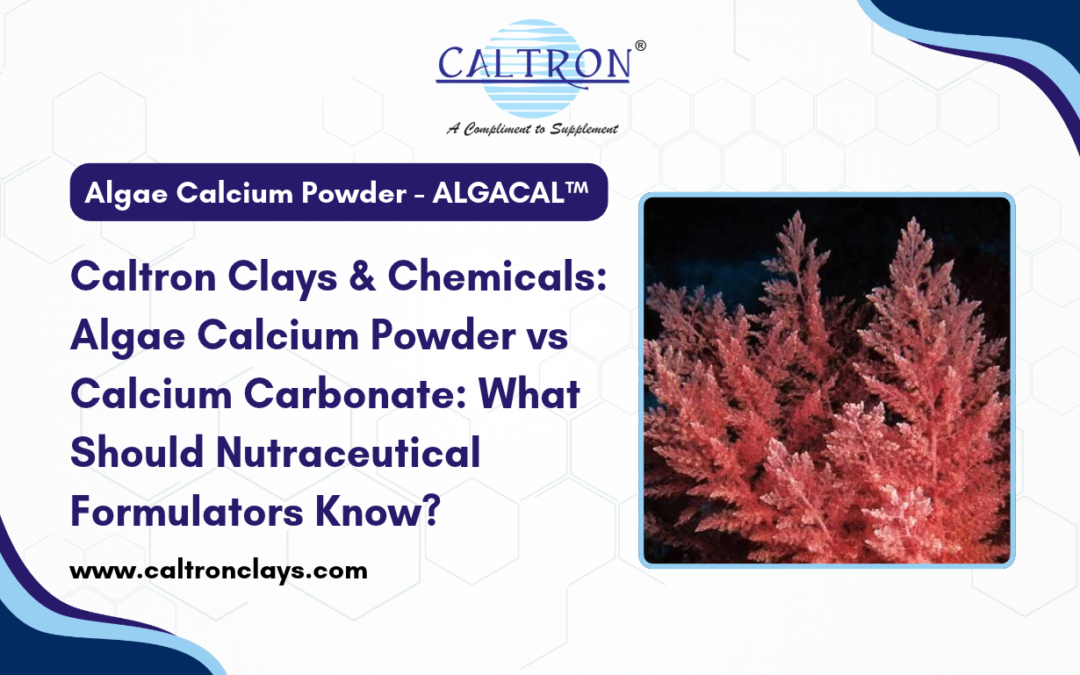
Introduction: Why Calcium Source Selection Matters in Nutraceutical Formulations
Choosing the right calcium source is a critical decision for nutraceutical manufacturers aiming to develop high-quality, effective, and market-competitive dietary supplements. As the global nutraceutical industry continues to evolve, the demand for naturally derived, mineral-rich, and plant-based calcium ingredients is creating new opportunities for supplement manufacturers. Among the available options, Algae Calcium Powder and conventional Calcium Carbonate have gained significant attention due to their differences in mineral composition, ingredient origin, formulation characteristics, and applications in bone health supplements.
Calcium is an essential mineral that supports normal bone development, teeth maintenance, muscle function, and several important physiological processes. However, selecting a suitable calcium raw material requires more than comparing elemental calcium percentages. Nutraceutical formulators must evaluate bioavailability, mineral profiles, particle size, ingredient compatibility, manufacturing requirements, and quality specifications to ensure consistent formulation performance.
As a trusted Algae Calcium Powder Manufacturer in India, Caltron Clays & Chemicals offers ALGACAL™, a naturally derived marine algae calcium ingredient developed for pharmaceutical and nutraceutical applications. Available in Lithothamnion and Chlorophyta grades, ALGACAL™ provides manufacturers with plant-origin calcium options containing naturally associated minerals.
For businesses searching for a reliable Algae Calcium Powder Exporter in India, understanding the differences between algae-derived calcium and conventional calcium carbonate is essential for informed ingredient sourcing and product development.
This comprehensive guide explores their mineral composition, calcium absorption, formulation considerations, quality requirements, and B2B sourcing factors to help nutraceutical manufacturers select the most suitable calcium ingredient for their formulations.
Algae Calcium Powder vs Calcium Carbonate: Understanding the Fundamental Differences
Selecting the appropriate calcium ingredient requires a clear understanding of its origin, chemical composition, processing characteristics, and intended application. Although algae calcium powder and conventional calcium carbonate are frequently compared as separate ingredient categories, they can share similar calcium-containing mineral chemistry.
What Is Algae Calcium Powder?
Algae calcium powder is a naturally derived mineral ingredient obtained from selected calcified marine algae. Certain algae species accumulate calcium-containing minerals within their structures, creating mineralized materials that can be processed for use in dietary supplements.
Algae-derived calcium is commonly associated with plant-based nutrition because of its marine algal origin. Depending on the species and processing method, the ingredient may contain calcium alongside magnesium and other naturally occurring minerals.
Common characteristics include:
- Marine algae-derived mineral composition.
- Naturally associated calcium and magnesium.
- Potential suitability for vegan supplement formulations.
- Applications in tablets, capsules, and powdered supplements.
- Ingredient differentiation based on natural origin.
ALGACAL™ by Caltron Clays & Chemicals Pvt. Ltd. offers a seaweed-derived calcium option for nutraceutical manufacturers developing mineral nutrition products.
What Is Conventional Calcium Carbonate?
Calcium carbonate is a widely used mineral compound with the chemical formula CaCO₃. It is commonly obtained from mineral deposits or other suitable calcium carbonate sources and processed to meet the requirements of specific applications.
Pure calcium carbonate contains approximately 40% elemental calcium by weight, making it a concentrated calcium source for supplement manufacturing.
Its established use in nutraceutical formulations is associated with:
- High theoretical elemental calcium concentration.
- Widespread availability.
- Established manufacturing applications.
- Compatibility with numerous solid dosage forms.
- Potential cost advantages depending on grade and supply conditions.
However, the actual characteristics of commercial calcium carbonate depend on its purity, particle size, processing history, and quality specifications.
Differences in Raw Material Origin and Mineral Composition
The primary distinction between algae calcium powder and conventional calcium carbonate lies in their source and overall mineral composition.
Algae calcium is obtained from calcified marine algae, whereas conventional calcium carbonate is generally produced from geological or other suitable mineral sources.
Importantly, algae-derived calcium may also contain calcium carbonate as a major mineral constituent. Therefore, the comparison is not necessarily between two completely different chemical forms of calcium.
The practical differences may involve mineral associations, processing methods, trace-element profiles, ingredient identity, and formulation characteristics.
Why the Calcium Source Matters in Nutraceutical Manufacturing
For supplement manufacturers, raw material selection influences product development, label positioning, ingredient loading, and procurement decisions.
A calcium ingredient with a higher elemental calcium concentration may require less material to achieve a target calcium dose. Conversely, an algae-derived mineral ingredient may offer a differentiated origin and naturally associated minerals.
Manufacturers should evaluate both options according to their intended product claims, technical specifications, manufacturing processes, and target consumers.
Ultimately, the most suitable calcium source depends on the finished formulation rather than ingredient origin alone.
Algae Calcium Powder – ALGACAL™ : Understanding Its Natural Mineral Composition
The mineral composition of a calcium ingredient plays an important role in determining its suitability for nutraceutical product development. Caltron Clays & Chemicals offers ALGACAL™ in two algae-derived grades, providing formulators with different ingredient options based on their requirements.
Lithothamnion Calcareum: A Red Algae-Derived Calcium Source
Lithothamnion calcareum is a calcified red algae associated with marine environments. Its mineralized structure contains calcium-rich material and naturally associated magnesium.
According to the supplied ALGACAL™ product specifications, the Lithothamnion grade offers:
- Calcium content: Not Less Than 35%.
- Magnesium content: Not Less Than 2.2%.
- A naturally occurring mineral matrix.
- A company-described profile of 74 trace minerals.
The stated calcium and magnesium percentages should be verified against the current grade-specific technical specification and batch Certificate of Analysis before commercial formulation.
This grade may be suitable for manufacturers developing calcium supplements that emphasize marine algae origin and a calcium-magnesium mineral profile.
Chlorophyta: An Alternative Algae Calcium Grade
Chlorophyta refers to a group of green algae that includes species with varying biological and mineral characteristics.
Caltron Clays & Chemicals also offers a Chlorophyta-derived ALGACAL™ grade as an alternative algae calcium ingredient.
Its suitability for a particular formulation should be evaluated using grade-specific information, including elemental calcium concentration, magnesium content, mineral profile, and physical characteristics.
For manufacturers comparing different marine algae calcium ingredients, access to multiple grades can support ingredient selection based on product development objectives.
The Role of Magnesium and Naturally Associated Trace Minerals
Magnesium is involved in numerous physiological functions, including processes associated with normal bone maintenance and mineral metabolism.
ALGACAL™ Lithothamnion grade contains magnesium alongside calcium, offering a combined mineral composition within the raw material.
The company also describes ALGACAL™ as containing 74 trace minerals. However, the presence, identity, and concentration of individual minerals should be confirmed through appropriate analytical documentation.
Not every detectable trace mineral necessarily contributes a nutritionally meaningful amount to a finished supplement.
For accurate formulation and labeling, manufacturers should calculate the contribution of each relevant mineral based on verified analytical results.
Why Mineral Composition Matters in Calcium Supplement Development
A mineral-rich calcium powder can influence formulation decisions involving ingredient loading, labeling, nutritional positioning, and product consistency.
Nutraceutical formulators should evaluate:
- Elemental calcium concentration per serving.
- Magnesium contribution from the ingredient.
- Verified trace mineral concentrations.
- Batch-to-batch composition.
- Compatibility with other formulation ingredients.
When selecting an Algae Calcium Powder Exporter in India, obtaining reliable grade-specific composition data is particularly important for international product development.
ALGACAL™ provides an algae-derived ingredient platform that manufacturers can assess for calcium-focused nutraceutical formulations.
Calcium Bioavailability and Absorption: What Does the Science Actually Say?
Calcium bioavailability is an important consideration when comparing algae calcium powder with conventional calcium carbonate. However, absorption depends on multiple physiological and formulation-related factors, and natural ingredient origin alone does not establish superior performance.
Understanding Calcium Bioavailability in Dietary Supplements
Calcium bioavailability refers to the proportion of ingested calcium that becomes available for absorption and utilization by the body.
Several related concepts must be distinguished:
- Elemental calcium indicates the actual quantity of calcium supplied by an ingredient.
- Solubility describes how much of a substance can dissolve under specified conditions.
- Dissolution describes the process and rate at which an ingredient dissolves.
- Bioavailability concerns the calcium that is absorbed and becomes available for physiological use.
A calcium ingredient with a high elemental calcium percentage does not automatically deliver the highest absorbed calcium amount under every condition.
How Calcium Carbonate Is Absorbed
Calcium carbonate is an established calcium supplement ingredient. Gastric acidity helps dissolve calcium carbonate and release calcium ions for intestinal absorption.
Calcium carbonate supplements are generally recommended with food because meal-related gastric acid production can support dissolution and absorption.
Absorption efficiency also depends on the calcium dose, individual physiology, and overall dietary conditions.
For formulation professionals, these factors highlight the importance of considering finished-product instructions and serving size rather than evaluating calcium content alone.
Factors That Influence Algae Calcium Absorption
Algae-derived calcium may contain calcium carbonate within a naturally occurring mineral matrix. Consequently, its absorption may be influenced by factors similar to those affecting conventional calcium carbonate.
Important considerations include:
- Gastric acidity and digestive conditions.
- Elemental calcium quantity per serving.
- Particle characteristics and dissolution behavior.
- Vitamin D status.
- Meal composition and timing.
- Other ingredients within the finished formulation.
Naturally associated magnesium and trace minerals may contribute to the overall nutritional composition, but their presence does not independently prove increased calcium absorption.
Why Formulators Should Evaluate Scientific Evidence
Claims about superior calcium bioavailability require appropriate scientific evidence.
Comparative studies should ideally evaluate equivalent elemental calcium doses, suitable participant populations, and relevant absorption outcomes.
Manufacturers should distinguish between ingredient-specific clinical research and general findings about algae-derived calcium.
An Algae Calcium Powder Exporter in India should be able to provide relevant product specifications and identify the scientific evidence supporting any proposed performance claims.
For R&D professionals, a balanced evaluation of calcium absorption, dissolution behavior, dosage, and formulation compatibility offers a more reliable foundation for ingredient selection than unsupported marketing comparisons.
Algae Calcium Powder vs Calcium Carbonate: Key Formulation Considerations
Choosing a calcium raw material involves practical manufacturing considerations that directly influence product performance, production efficiency, and finished dosage design. Nutraceutical formulators must evaluate the ingredient’s physical and chemical characteristics before selecting it for commercial manufacturing.
Elemental Calcium Concentration and Dosage Calculations
Elemental calcium concentration determines how much raw material is required to deliver a specified calcium quantity.
For example, consider a supplement designed to provide 500 mg of elemental calcium.
Using theoretical pure calcium carbonate containing approximately 40% calcium would require:
500 ÷ 0.40 = 1,250 mg of calcium carbonate.
Using an algae calcium ingredient containing 35% elemental calcium would require:
500 ÷ 0.35 = approximately 1,429 mg of algae calcium powder.
These calculations illustrate how calcium concentration affects ingredient loading. Actual formulation quantities must use verified batch specifications and account for manufacturing tolerances.
Higher raw material loading may influence tablet size, capsule count, excipient requirements, and production economics.
Particle Size, Flowability, and Powder Handling
Calcium particle size influences powder behavior during mixing, granulation, compression, and encapsulation.
Important parameters include:
- Particle size distribution.
- Bulk and tapped density.
- Flowability.
- Moisture content.
- Powder compressibility.
Very fine powders may create handling or dust-control challenges, while coarser particles may influence blend uniformity and finished-product texture.
Manufacturers should request physical specifications and conduct pilot-scale trials before finalizing ingredient selection.
Formulation Stability and Ingredient Compatibility
Mineral ingredient stability is another important factor in calcium supplement manufacturing.
Calcium-containing materials may interact with acidic ingredients, affecting product behavior in certain formulations.
For example, carbonate-containing ingredients can react with acids, potentially releasing carbon dioxide.
Formulators should evaluate ingredient compatibility in products containing vitamins, organic acids, botanical extracts, or other mineral components.
Accelerated and real-time stability studies can help determine whether the finished formulation maintains its intended characteristics throughout shelf life.
Applications in Tablets, Capsules, and Powder Supplements
Algae calcium powder and conventional calcium carbonate may be evaluated for multiple nutraceutical dosage formats.
Potential applications include:
- Calcium tablets.
- Mineral capsules.
- Bone health supplement blends.
- Calcium and magnesium formulations.
- Nutritional powder products.
Suitability depends on ingredient specifications, processing conditions, and finished-product requirements.
For gummies, beverages, and other complex systems, additional assessment of dispersibility, sedimentation, acidity, and sensory performance may be necessary.
Sensory Properties and Finished Product Development
Taste, mouthfeel, color, and powder texture can influence consumer acceptance, particularly in chewable or powdered supplement formats.
Calcium ingredients may contribute chalkiness or sedimentation depending on their physical characteristics and formulation environment.
Manufacturers should evaluate sensory performance alongside technical parameters rather than assuming that a natural-origin ingredient will automatically provide a better consumer experience.
For businesses sourcing from an Algae Calcium Powder Supplier in India, requesting representative samples for formulation trials can reduce development uncertainty.
A successful calcium supplement formulation requires balancing nutritional targets, ingredient characteristics, processing performance, and commercial feasibility.
Why Plant-Based Calcium Is Gaining Attention in Modern Nutraceutical Products
The growing interest in plant-origin nutrition has created new opportunities for nutraceutical manufacturers developing differentiated mineral supplements. Algae-derived calcium offers an ingredient-origin story that can support vegan nutrition, natural-source positioning, and specialized dietary supplement concepts. However, successful product development requires manufacturers to distinguish between consumer preferences and scientifically demonstrated ingredient performance.
Growing Interest in Vegan and Vegetarian Calcium Ingredients
Vegan and vegetarian supplement manufacturers increasingly consider ingredient origin when developing products for specific consumer groups.
Algae calcium powder provides a marine algae-derived alternative for brands seeking calcium ingredients that align with plant-based product concepts.
Potential advantages for product development include:
- Marine algae-derived ingredient positioning.
- Suitability for vegan supplement concepts, subject to certification.
- Naturally associated mineral components.
- Opportunities for differentiated product labeling.
- Applications in specialized dietary supplement formulations.
Caltron Clays & Chemicals markets ALGACAL™ as a vegan-suitable calcium ingredient and references vegan approval on its official product page. Manufacturers should request current supporting documentation before using certification claims on finished-product packaging.
Caltron Clays
Algae Calcium for Plant-Based Supplement Positioning
Ingredient origin can influence how consumers perceive dietary supplements.
An algae-derived calcium ingredient may appeal to consumers seeking mineral nutrition products sourced from marine plants rather than conventional geological mineral deposits.
However, conventional calcium carbonate is not inherently unsuitable for vegans. Many mineral-derived calcium carbonate ingredients may also be vegan-compatible, depending on sourcing, processing aids, and finished-product composition.
Therefore, the distinction is primarily related to ingredient origin, mineral composition, and brand positioning rather than an absolute difference in vegan suitability.
Clean-Label and Natural-Origin Ingredient Considerations
Clean-label product development generally emphasizes understandable ingredient descriptions, transparent sourcing, and appropriate manufacturing practices.
ALGACAL™ offers nutraceutical brands an opportunity to communicate marine algae origin as part of their ingredient story.
Nevertheless, natural-origin positioning must be supported by accurate documentation and must not imply that the ingredient is automatically safer, more effective, or more bioavailable than other calcium sources.
Manufacturers should also verify applicable labeling requirements in their intended markets.
Opportunities for Bone Health and Healthy Aging Product Concepts
Calcium remains an important ingredient in supplements developed to support normal bone maintenance.
Algae-derived calcium may be considered for:
- Adult calcium supplements.
- Bone health nutrition products.
- Calcium and magnesium combinations.
- Vegan mineral supplement capsules.
- Healthy aging nutritional formulations.
Product claims should be based on the finished formulation, relevant scientific evidence, and applicable regulations.
For companies evaluating an Algae Calcium Powder Exporter in India, ALGACAL™ offers an ingredient option for developing calcium products with a differentiated marine algae origin.
By combining suitable ingredient selection with responsible product positioning, nutraceutical manufacturers can develop formulations that address consumer preferences while maintaining technical credibility.
Quality Control and Technical Specifications: What Nutraceutical Manufacturers Should Evaluate
Quality control is essential when selecting calcium raw materials for pharmaceutical and nutraceutical manufacturing. Whether using algae-derived calcium or conventional calcium carbonate, manufacturers must establish suitable specifications to support ingredient safety, consistency, and regulatory compliance.
Calcium and Magnesium Content Verification
The first requirement is verifying the elemental mineral concentration.
For ALGACAL™ Lithothamnion grade, Caltron Clays & Chemicals publishes minimum calcium and magnesium contents of 35% and 2.2%, respectively.
Caltron Clays
Manufacturers should obtain batch-specific analytical results to confirm compliance with agreed specifications.
Suitable analytical methods may include validated elemental analysis techniques such as ICP-OES or atomic absorption spectroscopy.
Accurate mineral content verification helps ensure consistent dosage calculations and finished-product labeling.
Heavy Metals, Microbiological Quality, and Ingredient Purity
Marine-derived ingredients require appropriate evaluation of potential contaminants.
Relevant quality parameters may include:
- Lead, cadmium, arsenic, and mercury.
- Applicable inorganic arsenic assessment where required.
- Total microbial counts.
- Specified pathogenic microorganisms.
- Moisture and other relevant impurities.
Acceptance criteria should reflect the intended use, applicable regulatory requirements, and finished-product exposure.
A responsible Pharmaceutical Raw Material Manufacturer in India should support appropriate ingredient quality evaluation through relevant specifications and documentation.
Particle Size Distribution and Batch Consistency
Particle characteristics can affect manufacturing performance.
Changes in particle size distribution may influence flowability, blending, compression, and finished-product uniformity.
For this reason, manufacturers should establish appropriate physical specifications and monitor consistency between commercial batches.
A reliable Nutraceutical Raw Material Manufacturer in India should also communicate significant specification or process changes that could affect ingredient performance.
Certificates of Analysis and Raw Material Traceability
A Certificate of Analysis provides batch-specific information about selected quality parameters.
Depending on the ingredient and application, buyers may request:
- Batch identification and manufacturing information.
- Calcium and magnesium assay results.
- Relevant contaminant testing.
- Microbiological results.
- Physical specifications.
- Applicable test methods and acceptance limits.
Raw material traceability is especially important when sourcing marine-derived ingredients from international supply chains.
Caltron Clays & Chemicals states that it performs quality checks throughout its production process, from raw material procurement to dispatch. Buyers should confirm the available documentation for their selected ALGACAL™ grade.
Regulatory and Documentation Requirements
Regulatory suitability depends on the intended market and finished-product category.
A Pharmaceutical Raw Material Supplier in India or Nutraceutical Raw Material Supplier in India may be asked to provide technical specifications, ingredient-origin information, allergen statements, and other supporting documents.
International buyers should also assess whether the ingredient is permitted for the intended application in the destination country.
Choosing an Algae Calcium Powder Exporter in India should therefore involve evaluating both ingredient quality and the supplier’s ability to support appropriate documentation.
A systematic quality assessment helps nutraceutical manufacturers reduce sourcing uncertainty, maintain formulation consistency, and establish reliable ingredient procurement practices.
How to Choose the Right Algae Calcium Powder Manufacturer and Supplier in India
Selecting a calcium ingredient supplier is an important commercial decision for nutraceutical manufacturers, contract manufacturers, and international distributors. Beyond price and availability, buyers should evaluate technical expertise, quality consistency, documentation, and responsiveness to formulation requirements.
Assessing Manufacturing Expertise and Product Consistency
A reliable Algae Calcium Powder Manufacturer in India should demonstrate an understanding of mineral ingredient processing and relevant quality requirements.
Caltron Clays & Chemicals highlights more than two decades of experience in the pharmaceutical raw material industry and its research and development work associated with ALGACAL™.
Caltron Clays
When assessing potential suppliers, buyers should consider manufacturing experience, quality-control practices, product specifications, and the availability of suitable technical information.
Evaluating Bulk Supply and Procurement Requirements
Bulk algae calcium powder procurement requires planning around production schedules, order quantities, packaging, and supply continuity.
Before placing commercial orders, buyers should clarify:
- Required ingredient grade.
- Expected annual or monthly consumption.
- Packaging requirements.
- Minimum order quantities.
- Commercial terms and delivery expectations.
A qualified algae calcium powder wholesale supplier should be able to discuss these requirements and provide relevant commercial information.
Reviewing Technical Documentation and Product Specifications
Technical documentation is essential for comparing calcium ingredient suppliers.
Procurement teams should request current product specifications, representative batch data, and relevant quality documentation.
For ALGACAL™, manufacturers should identify whether Lithothamnion or Chlorophyta is more suitable for their formulation.
Samples can then be evaluated for calcium content, powder behavior, ingredient compatibility, and manufacturing performance.
Understanding Export Documentation and International Buyer Expectations
International nutraceutical companies may require additional documentation before approving an ingredient supplier.
An Algae Calcium Powder Exporter in India should be assessed for its ability to provide applicable export and product documentation.
Depending on the transaction and destination market, requirements may include commercial invoices, packing lists, certificates of origin, and ingredient-specific technical information.
Importers remain responsible for confirming local regulatory requirements and any applicable import restrictions.
Why Supplier Communication Matters for Long-Term B2B Partnerships
Effective supplier communication can support formulation development and procurement planning.
A dependable Algae Calcium Powder Supplier in India should provide clear responses regarding product grades, specifications, sample availability, and commercial inquiries.
For businesses comparing a Nutraceutical Raw Material Manufacturer in India with a Nutraceutical Raw Material Supplier in India, the important consideration is whether the organization can consistently support the intended application.
Caltron Clays & Chemicals offers ALGACAL™ as a specialized algae calcium ingredient and provides an opportunity for buyers to discuss their formulation and sourcing requirements.
A structured supplier evaluation can help manufacturers build long-term procurement relationships based on quality, transparency, and technical suitability.
Why Choose Caltron Clays & Chemicals for Algae Calcium Powder – ALGACAL™ ?
Caltron Clays & Chemicals combines pharmaceutical raw material industry experience with a dedicated algae calcium product offering. Through ALGACAL™, the company provides nutraceutical manufacturers with marine algae-derived calcium options for developing mineral nutrition supplements.
More Than Two Decades of Pharmaceutical Raw Material Expertise
Caltron Clays & Chemicals has over two decades of experience in the pharmaceutical raw material sector.
As an Algae Calcium Powder Manufacturer in India, the company emphasizes product development, ingredient quality, and continuous improvement.
Its experience as a Pharmaceutical Raw Material Manufacturer in India supports its understanding of the technical considerations involved in supplying ingredients for regulated product categories.
ALGACAL™ Lithothamnion and Chlorophyta Product Options
ALGACAL™ is available in two algae-derived grades.
The Lithothamnion grade offers a published minimum calcium content of 35% and magnesium content of 2.2%.
The Chlorophyta grade provides an additional algae-derived option for formulators seeking different ingredient characteristics.
Having access to both grades allows manufacturers to evaluate raw materials according to their specific nutritional and processing requirements.
Focus on Ingredient Quality and Consistency
Caltron Clays & Chemicals emphasizes quality checks across its algae calcium production process.
For nutraceutical manufacturers, consistency is important because variations in mineral composition or powder characteristics may affect dosage calculations and processing performance.
Buyers should request current technical specifications and batch-specific quality information before approving commercial material.
Support for Nutraceutical Manufacturers and Bulk Buyers
Caltron Clays & Chemicals serves as a potential sourcing partner for businesses seeking algae-derived calcium ingredients.
As a Pharmaceutical Raw Material Supplier in India, the company can be approached for ALGACAL™ product inquiries, technical specifications, and bulk procurement discussions.
Manufacturers should communicate their target dosage format, elemental calcium requirements, and expected purchase volumes when requesting information.
ALGACAL™ for Modern Calcium Supplement Formulations
ALGACAL™ can be evaluated for calcium tablets, mineral capsules, and suitable powdered nutritional products.
Its marine algae origin and associated mineral composition provide opportunities for nutraceutical brands developing plant-origin supplement concepts.
For international buyers seeking an Algae Calcium Powder Exporter in India, Caltron Clays & Chemicals offers a product-focused point of contact for discussing ingredient availability and technical requirements.
By combining its industry experience with ALGACAL™ product specialization, Caltron Clays & Chemicals aims to support manufacturers seeking quality-focused algae calcium sourcing solutions.
Conclusion: Choosing the Right Calcium Source for Your Nutraceutical Formulation
The comparison between algae calcium powder and conventional calcium carbonate demonstrates why calcium ingredient selection requires more than evaluating elemental calcium concentration.
Both ingredients can supply calcium in carbonate form, but their raw material origins, associated mineral profiles, processing characteristics, and product positioning may differ.
Conventional calcium carbonate offers an established calcium source with a high theoretical elemental calcium concentration. Algae-derived calcium provides an alternative for manufacturers seeking marine-origin ingredients with naturally associated minerals.
The most appropriate choice depends on nutritional targets, dosage requirements, manufacturing compatibility, quality specifications, scientific evidence, and commercial considerations.
Caltron Clays & Chemicals, an Algae Calcium Powder Manufacturer in India, offers ALGACAL™ in Lithothamnion and Chlorophyta grades for nutraceutical product development.
As an Algae Calcium Powder Supplier in India, the company provides a sourcing option for manufacturers interested in algae-derived mineral ingredients.
Businesses evaluating an Algae Calcium Powder Exporter in India can explore ALGACAL™ and request relevant technical information before making procurement decisions.
Looking for a reliable algae calcium ingredient for your next nutraceutical formulation? Connect with Caltron Clays & Chemicals to discuss ALGACAL™ product specifications, samples, and bulk sourcing requirements.
Frequently Asked Questions
1. What is the difference between Algae Calcium Powder and Calcium Carbonate?
Algae Calcium Powder is derived from marine algae and contains naturally associated minerals, while conventional calcium carbonate is commonly sourced from mineral deposits. Caltron Clays & Chemicals offers ALGACAL™, an algae-derived calcium ingredient for nutraceutical formulations.
2. Is Algae Calcium Powder better than Calcium Carbonate?
Algae Calcium Powder offers a marine-derived mineral profile, while conventional calcium carbonate provides a concentrated source of elemental calcium. Caltron Clays & Chemicals offers ALGACAL™ for manufacturers seeking plant-origin calcium ingredients.
3. What are the benefits of Algae Calcium Powder?
Algae Calcium Powder supplies calcium along with naturally associated minerals such as magnesium, depending on the grade. Caltron Clays & Chemicals offers ALGACAL™ for calcium supplements, mineral nutrition products, and bone health formulations.
4. Is Algae Calcium Powder more easily absorbed than Calcium Carbonate?
Algae Calcium Powder is not necessarily better absorbed than calcium carbonate, as absorption depends on dosage, dissolution, and digestive conditions. Caltron Clays & Chemicals provides ALGACAL™ for manufacturers evaluating algae-derived calcium sources.
5. What is the calcium content of ALGACAL™ Algae Calcium Powder?
Caltron Clays & Chemicals offers ALGACAL™ Lithothamnion grade with a specified minimum calcium content of 35% and magnesium content of 2.2%. Actual batch composition should be confirmed through the Certificate of Analysis.
6. Is Algae Calcium Powder suitable for vegan supplements?
Yes, algae-derived calcium can be suitable for vegan and vegetarian supplement formulations when appropriate sourcing and certification requirements are met. Caltron Clays & Chemicals offers ALGACAL™ as a vegan-suitable calcium ingredient.
7. Which calcium source is best for nutraceutical supplement manufacturing?
The best calcium source depends on elemental calcium requirements, formulation compatibility, ingredient quality, and product positioning. Caltron Clays & Chemicals offers ALGACAL™ as an algae-derived option for nutraceutical manufacturers.
8. What are the applications of Algae Calcium Powder in nutraceuticals?
Algae Calcium Powder can be used in calcium tablets, capsules, mineral blends, and suitable powdered nutritional supplements. Caltron Clays & Chemicals supplies ALGACAL™ for manufacturers developing calcium-based nutraceutical formulations.
9. Who is a reliable Algae Calcium Powder Manufacturer and Supplier in India?
Caltron Clays & Chemicals is an Algae Calcium Powder Manufacturer and Supplier in India, offering ALGACAL™ in Lithothamnion and Chlorophyta grades. The company focuses on ingredient quality, mineral composition, and B2B raw material sourcing.
10. Where can I buy bulk Algae Calcium Powder in India?
Nutraceutical manufacturers and distributors can contact Caltron Clays & Chemicals for bulk ALGACAL™ Algae Calcium Powder inquiries. As an Algae Calcium Powder Supplier in India, the company offers product information and sourcing support for B2B buyers.
Explore ALGACAL™ Calcium Solutions & Enquire for Bulk Supply
Caltron Clays & Chemicals Pvt Ltd
Address: Suite# 1901-1904, Level-19, 9 Business Bay, Off Link Road, Mindspace, Malad West, Mumbai 400064
Phone No.: 022 3571 9844 | +91 70214 37453 | +91 22 2876 4864
Website: https://caltronclays.com
Email: marketing@caltronclays.com | sales@caltronclays.com
Google Maps: https://maps.app.goo.gl/n2TeYQcnXnS4aMio9
Recent Comments